Hula kahiko
13 schools across Canada
"Kahiko" means ancient, and hula kahiko is the older form of the dance: the hula that took shape in the islands before Western contact.
Read more
Its sister style, hula ʻauana, grew up later alongside the guitar and ʻukulele, but kahiko keeps to the chant and percussion that carried hula for generations. As museums and cultural institutions describe it, kahiko is hula in the traditional manner, without the melodic string instruments of the modern style.
The clearest way to recognize kahiko is to listen. The dancer moves not to a sung melody but to oli or mele, the chanted poetry that tells the story, and to the beat of traditional instruments: the ipu and ipu heke (single and double gourd drums), the pahu (a sharkskin-covered drum), the ʻulīʻulī (feathered gourd rattles) and the pūʻili (split bamboo). The human voice and the drum carry the dance, and there is no guitar or ʻukulele. The adornments, too, come from older, natural materials such as kapa (bark cloth) rather than modern fabric.
The Merrie Monarch Festival, which honours King David Kalākaua for the renewed pride he brought to hula and the other Hawaiian arts, describes hula as one of the ways Hawaiians expressed and chronicled their culture. Under Kalākaua, hula returned to public life; his 1883 coronation and 1886 jubilee both featured ancient and newly created dances. Today the festival keeps kahiko and ʻauana as separate categories so the ancient style continues to be danced on its own terms. In every case the dance is learned in a hālau, a hula school, from a kumu hula, the teacher whose title means "source of knowledge."
Kahiko asks a lot of a dancer, and the kumu and their hālau are the ones to learn it from; a directory can only point the way. The schools listed on this page include hula kahiko in what they teach across Canada; reach out to any of them to find where you might begin.
Hula school serving the Greater Toronto Area, sister hālau to Hālau Hula I Ka Lā in Clovis, California. Presenter of AlohaFest Toronto.

"To begin to breathe aloha" — non-profit society established 2019, teaching hula kahiko, ʻauana and ʻori Tahiti at Blue Quill Community Hall in south Edmonton, with an annual Hōʻike.
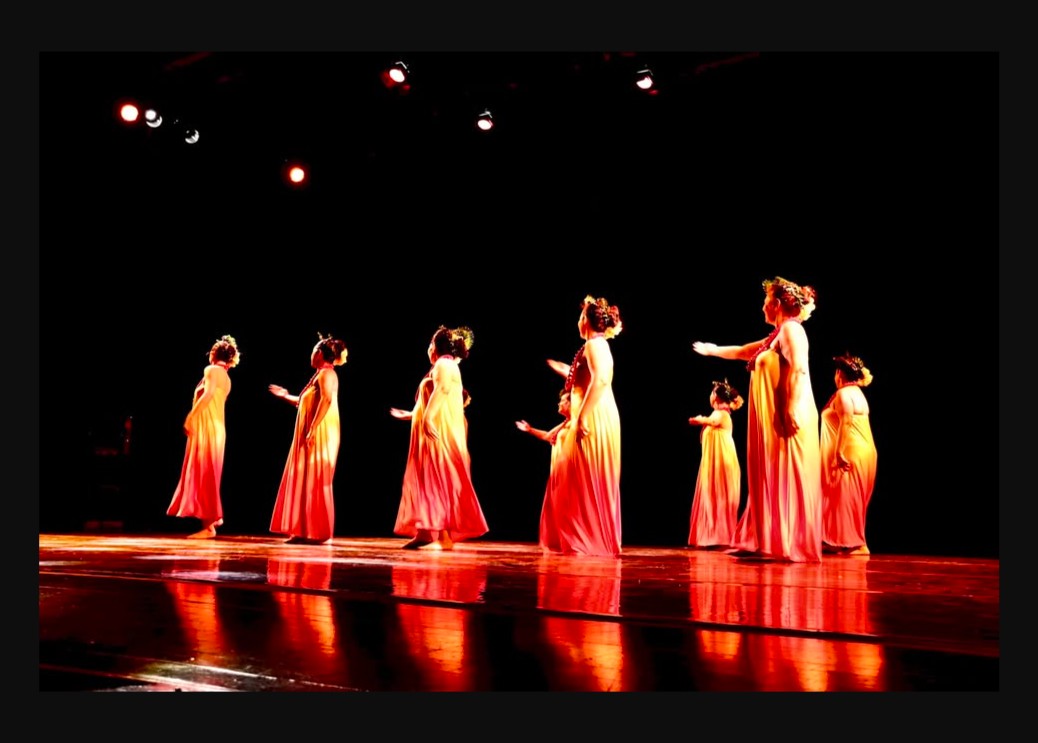
Montréal Hawaiian hula group — the local chapter of Hālau o Keikialiʻi under Kumu Hula Kawika Alfiche — teaching hula kahiko and ʻauana with oli and mele, in French and English.
Toronto hula school sharing Hawaiian culture through hula since 1986, with Sunday classes in Scarborough for all levels from beginner to competitive dancer.

Markham hula hālau led by kumu hula Joy Emalani Walea Corpuz-McKoy, perpetuating hula and Hawaiian and Polynesian arts. One of the largest hālau in the GTA (around 100 members), it presents an annual Hōʻike and in 2025 became the second Canadian hālau invited to compete at the Queen Liliʻuokalani Keiki Hula Competition in Honolulu.
Canada branch of Hālau Ka Liko Pua O Kalaniākea — the Kāneʻohe, Oʻahu hālau founded by Kumu Hula Kapua Dalire-Moe, a former Miss Aloha Hula whose dancers compete at the Merrie Monarch Festival in hula kahiko and ʻauana.
Founded in 1982 by Kumu Hula Mela-Lilia Uriarte — over 200 dancers across the GTA, with classes in Markham and Mississauga (ages 3+) and decades of festival performances worldwide.
London, Ontario's authentic Hawaiian dance company — hula kahiko and ʻauana for performances, events, and workshops.
Hawaiian hula school in Maple Ridge, BC under the Spirit of the Pacific Cultural Society, a non-profit preserving Hawaiian and Polynesian cultural heritage. Teaches Hawaiian hula and, through its sister school Te Varua O Moana Nui A Hiva, Tahitian dance, with an annual Hōʻike.
Langley, BC Polynesian dance — hula kahiko and ʻauana, Tahitian and Māori — founded by Susan Hill Madec in 2000. Now performing as Paradise Found Polynesian Entertainers (2024), with classes for all ages and levels.
Canada's first authentic premier Polynesian dance company, established 1971. Kumu Hula Paul Tavai-Latta holds Canada's only Master's degree as Kumu Hula/Raʻatira (Instructor/Director). Classes for all ages across four BC locations plus online, with 55 years of instruction and performance.