Mele & ukulele
4 schools across Canada
Most of the styles in this directory are dances. Mele is the sung poetry those dances are set to.
Read more
In Hawaiian, mele means a poem, a song, or the act of singing, and the person who composes one, the haku mele, is often described as a weaver of words: someone who arranges language the way a lei is braided, drawing on the names of places, people and the natural world. A mele might honour someone by name (a mele inoa, or name chant) or carry a love song. Hawaiian cultural educators describe mele as handed down from one generation to the next, holding a community's history and its spirit of aloha.
Mele is closely tied to oli, the chanted tradition. University of Hawaiʻi resources describe oli as compositions that are primarily chanted, while mele are compositions that may be chanted or sung, whether on their own or as accompaniment to hula, with or without instruments. The same poetry, in other words, can be chanted or set to a melody and instruments; either way, the words come first and the music serves them.
This is where the ʻukulele comes in. It grew out of small Portuguese instruments, the machete, cavaquinho and rajão, brought to Hawaiʻi by Madeiran immigrants who arrived on the ship Ravenscrag in late August 1879. Three of them, cabinet makers by trade, are generally credited as the instrument's first makers, often working in koa, a wood native to Hawaiʻi. King Kalākaua, a patron of the arts, took up the ʻukulele at royal gatherings, and it became one of the signature voices of Hawaiian song. Its name is usually translated as "jumping flea."
The ʻukulele belongs to the sung side of this tradition. Where hula kahiko, the older style, is danced to chant and traditional instruments, hula ʻauana, which developed under Western influence, is danced to sung mele accompanied by strings such as the ʻukulele, guitar and bass. Hula gives visual form to the words: the dancer interprets the poetry the singer is carrying. That is why a category about song and music sits here alongside the dance styles. Learn the mele, and much of what a dance is saying comes into view.
The schools listed on this page carry mele alongside the dances it accompanies; browse their profiles below, and reach out to any that interest you.
Hula school serving the Greater Toronto Area, sister hālau to Hālau Hula I Ka Lā in Clovis, California. Presenter of AlohaFest Toronto.
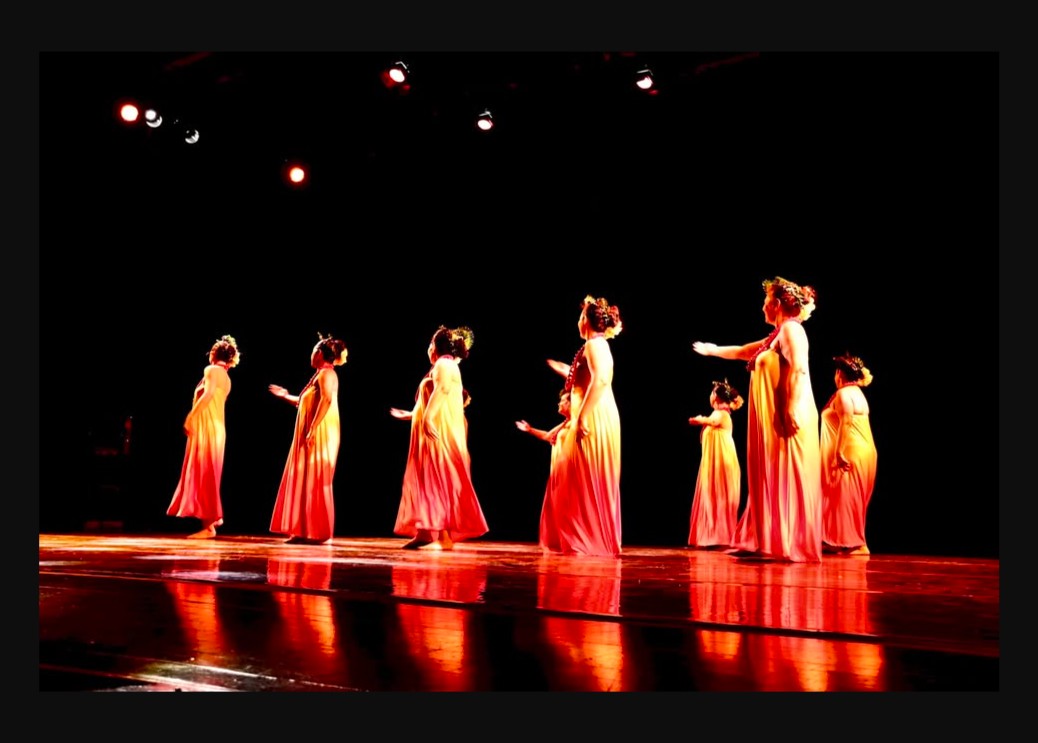
Montréal Hawaiian hula group — the local chapter of Hālau o Keikialiʻi under Kumu Hula Kawika Alfiche — teaching hula kahiko and ʻauana with oli and mele, in French and English.
Calgary's only Hawaiian performance arts group, founded in 2011 and directed by Taraya Middleton, who travels to Hawaiʻi to study hula with master kumu. Modern Hawaiian routines for weddings, lūʻau and community events across Alberta and Western Canada.

Edmonton Polynesian dance and drumming group directed by Tracy ʻKelikaʻ Thorne, teaching the dances and mele of Hawaiʻi, Tahiti, Aotearoa and Samoa for over 20 years through recreational classes, an intermediate program and a performing company.